
Boards of Directors of community associations have a fiduciary duty to its members, and one of the Board’s duties is the protection of the association’s physical assets. In Florida, the need for adequate property insurance to protect against hurricanes and severe storms is inescapable.
What is often misunderstood, however, are the coverage differences between protecting against the perils of flood damage and windstorm damage, even though both perils are commonly associated with hurricanes and severe storms. Failing to understand the differences between these coverages can result in costly gaps in coverage and the potential for having to levy a special assessment to address those gaps in coverage.
Windstorm Damage
Windstorm damage is typically covered under the association’s commercial property insurance policy, although it may also be covered as a stand-alone policy. This coverage generally applies when damage is caused directly by:
- High winds
- Wind-driven rain entering through storm-created openings
- Debris propelled by wind
- Fallen trees caused by wind
For example, if strong winds remove sections of a roof or shatter windows or sliding glass doors, this is usually classified as windstorm damage, which typically is subject to a different deductible than for other types of property damage. This deductible is often stated as a percentage rather than a dollar amount, such as 2% to 5% of the insurance limit on the building. Water damage to the interior of the building may be limited or excluded unless wind first created an opening.
Flood Damage
Damage caused by floods is typically not covered under an association’s standard property insurance policy. This is not to be confused with water damage resulting from a burst pipe, for example, which is generally an “occurrence” for which coverage is provided, although it may be subject to other exclusions.
Instead, the term “flood” has a legal definition in Florida Statutes and in insurance policies. Under Florida Statutes §627.715(1)(b), “flood” means “a general and temporary condition of partial or complete inundation of two or more acres of normally dry land area or of two or more properties, at least one of which is the policyholder’s property, from:
- Overflow of inland or tidal waters;
- Unusual and rapid accumulation or runoff of surface waters from any source;
- Mudflow; or
- Collapse or subsidence of land along the shore of a lake or similar body of water as a result of erosion or undermining caused by waves or currents of water exceeding anticipated cyclical levels that result in a flood as defined in this paragraph.”
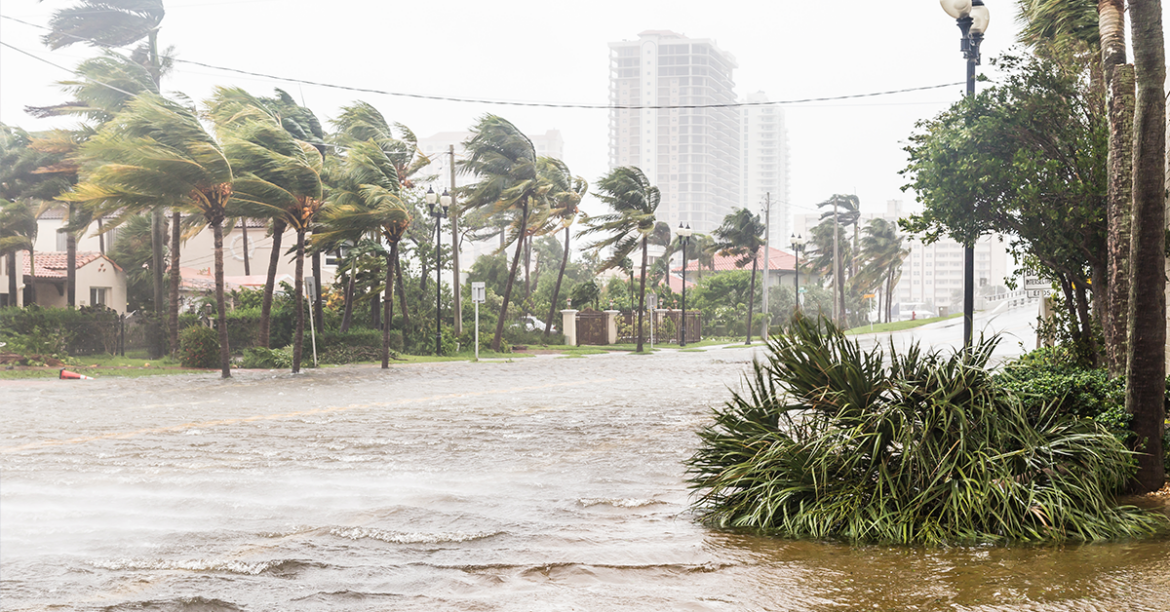
In other words, a flood involves more than a single property. Thus, rainwater that enters from above through a wind-damaged roof is typically windstorm, while water that rises from the ground, such as seawater that is pushed into first-floor units is storm surge, for which flood insurance is needed.
When Hurricane Ian struck Sanibel Island, for example, many associations suffered wind damage to their roofs, yet the overwhelming majority of their losses were caused by the storm surge, which left ground-level lobbies, elevators, ground-floor units, and mechanical rooms submerged. Because storm surge is classified as flood rather than wind, those losses had to be covered by the NFIP policies, and because many associations had not purchased excess flood coverage to supplement the NFIP policy limits, their coverage proved grossly inadequate. The result? Huge special assessments, bank loans, or termination of the condominium in cases where reconstruction was financially impossible or impractical.
Practical Considerations for Boards and Managers
- Carry both wind and flood coverage when exposure exists.
- Review deductibles annually and plan reserves accordingly.
- Confirm that coverage limits are adequate and satisfy the requirements set forth in Florida Statutes and the association’s governing documents.
- Document property conditions before storm season.
- Consult with legal counsel to address any of these concerns or to determine the maintenance and repair responsibilities of the association and individual unit owners.